
July 24, 2026
Budapest is one of the best cities in Central Europe for travelers who like to understand a place through food. The city has historic cafés, large market halls, traditional bistros, street snacks, rich soups, paprika-heavy sauces, and a dining culture that feels generous without becoming overly formal.
A good Budapest food day does not need to be complicated. The Pest side is especially useful for a self-guided culinary walk because many stops sit close enough to combine with sightseeing. A route can start with coffee, continue through the Great Market Hall, include a walk past major landmarks, and finish with a traditional Hungarian dinner.
The result is a full day that gives visitors a practical introduction to Hungarian food without turning the trip into a restaurant checklist.
Quick Food Route:
| When? | Stop | Best for |
| Morning | Central Café | Coffee, pastries, historic atmosphere |
| Lunch | Great Market Hall | Sausages, lángos, paprika, market shopping |
| Afternoon | Pest walk | Synagogue, St Stephen’s Basilica, Parliament |
| Dinner | Hungarikum Bisztro | Goulash, duck, pork dishes, classic Hungarian menu |
| Extra stop | Szeraj | Casual Turkish food, gyros, quick lunch |
Start with Coffee at Central Café

Central Café is a strong place to begin a Budapest food route because it combines breakfast, coffee, architecture, and local history in one stop. The café dates back to 1887 and belongs to the tradition of grand Budapest coffee houses, where literature, politics, journalism, and everyday city life often met at the same tables.
For a light start, coffee and a pastry are enough. Travelers who want a fuller breakfast can stay longer, but the best strategy is usually to keep the morning flexible because the next stop is much heavier.
This is also a useful first location because it sets the tone for the day. Budapest food is not only about large portions and paprika. It also includes café culture, old interiors, slow breakfasts, and a sense that eating can be part of the city’s intellectual and social history.
Explore the Great Market Hall
After coffee, the route can continue toward the Great Market Hall, also known as the Central Market Hall. It is one of the most recognizable food spaces in Budapest and a practical stop for both eating and shopping.
The market is useful because it gives visitors a concentrated view of Hungarian ingredients. Paprika, sausages, salami, pickled vegetables, pastries, sweets, spirits, and souvenir products are all part of the experience. Even travelers who do not plan to cook can leave with paprika or another small food souvenir.
Lunch is the main reason to stay longer. The upper level is usually the place to look for cooked food, with stalls serving filling dishes that work well in the middle of a walking day. Sausages with fried potatoes and sauerkraut are a reliable choice, especially for visitors who want something simple but clearly local.
Lángos is another essential option. This deep-fried flatbread is usually served with sour cream and cheese, and it is one of the most popular casual foods in Hungary. It is heavy, salty, warm, and not designed for moderation, which is part of its appeal.
The market can be busy, so it is better to treat lunch here as part of the atmosphere rather than a quiet meal. The point is to walk, look, compare stalls, and choose something that feels right in the moment.
Use the Afternoon for Pest Sightseeing
A food route in Budapest works best when meals are separated by walking. After the market, Pest offers several natural directions for an afternoon route.
The Jewish Quarter is a good option for visitors who want to see another part of the city’s cultural history. From there, the walk can continue toward St Stephen’s Basilica and then to the Hungarian Parliament Building. This route gives enough time between lunch and dinner, while keeping the day focused on central Budapest.
It also helps balance the food. Hungarian meals can be rich, especially when they include sausage, fried dough, potatoes, duck, pork, or paprika sauce. Walking between stops makes the route more comfortable and gives the day a better rhythm.
Book Dinner at Hungarikum Bisztro
For dinner, Hungarikum Bisztro is the most traditional stop on this route. It is a small and popular restaurant, so booking ahead is strongly recommended. The main reason to go is not experimental cooking, but classic Hungarian food served in a straightforward and welcoming format.
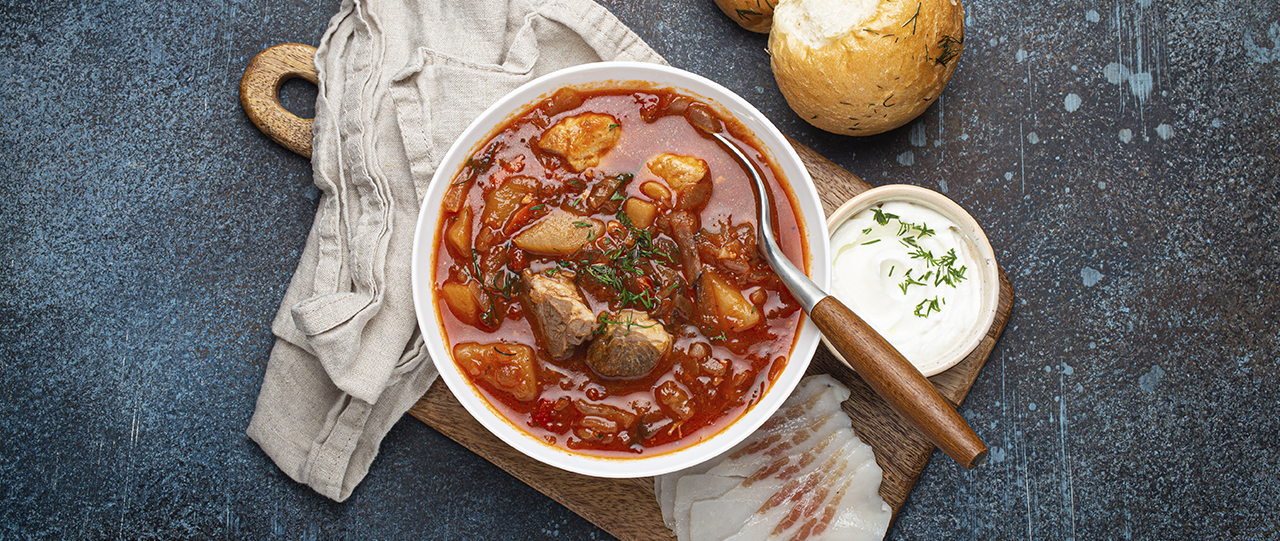
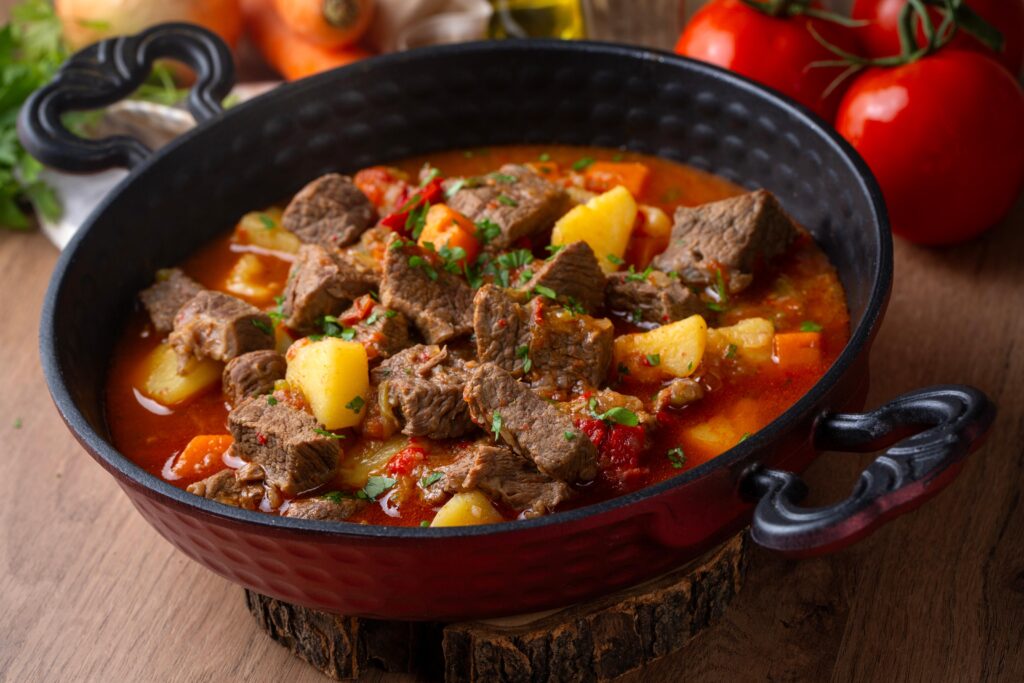
Goulash is the obvious starting point. For many visitors, it is the dish that defines Hungarian food, but quality varies from place to place. A good version should feel deep, warming, and balanced, with enough paprika character without becoming flat or heavy.
Other strong dinner choices include crispy duck leg with cabbage, paprika-sauced pork, dumplings, and classic desserts such as apple pie with cinnamon and vanilla sauce. These dishes show the side of Budapest dining that is generous, traditional, and built around comfort.
Hungarikum Bisztro is also useful for travelers who are not fully familiar with Hungarian cuisine. A smaller restaurant with attentive service can make ordering easier, especially when the menu includes dishes that may be unfamiliar at first glance.
Add Szeraj for a Casual Extra Stop
Budapest also has good casual food beyond Hungarian classics. Szeraj, located around Szent István körút, is a popular Turkish food stop and can work well for a quick lunch, late breakfast, or informal meal between sightseeing plans.
The style is simple and direct. Visitors choose from prepared dishes, gyros, sides, and warm plates in a canteen-like format. It is not the main Hungarian food experience of the day, but it gives the route more variety and reflects the wider everyday food scene of Budapest.